
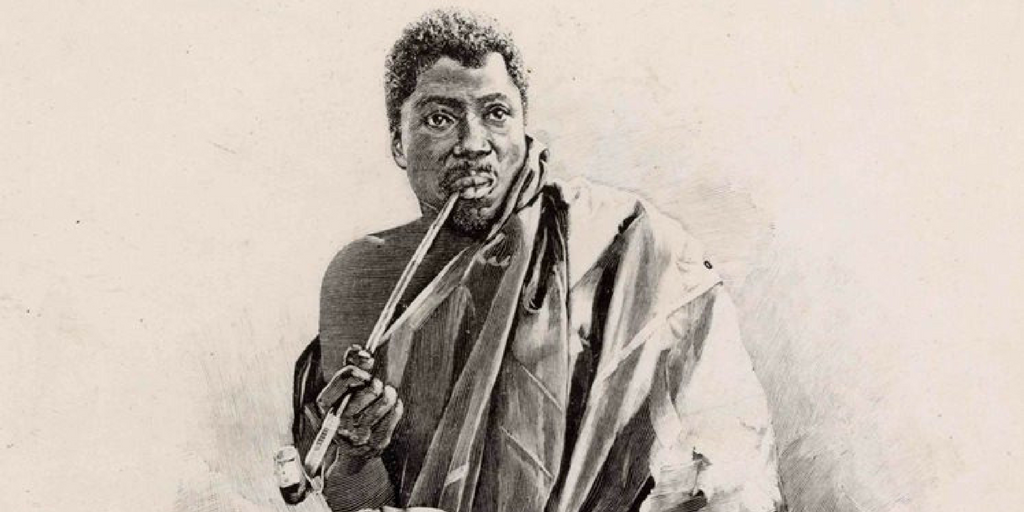
Who does not know the story of Behanzin, the famous king of the Akaba[1] lineage ? Nobody, will you say to me. But everyone knows King Behanzin’s story, as vague as it may be, told by historians and school teachers, differing from one place to another, from one storyteller to another. Well, what if we tell you the story through the writings of King Behanzin himself?
In 2006, during the commemoration of the centenary of King Behanzin’s death, the Zinsou Foundation published “Béhanzin, correspondances et discours”, providing the public with unpublished sources on the life of the king. 11 years later, we look at the 11 letters written by the latter and contained in the archives to trace his story.
A legacy coveted by the French and the Portuguese
The first letter is a message from Glele, predecessor and father of Behanzin, to Dom Louis 1st, King of Portugal. He rejected a protectorate giving rights to the Portuguese on Ouidah lands and signed behind his back. For Glelé, it was unacceptable to allow Europeans to take over African lands.
Behanzin’s father only allowed the continuation of the commercial relations initiated in 1841 by his own father, King Guézo. He even planned to teach Africans how to make fabrics, glassware and any other items from Europe in order to take over the market and put an end to this trade relationship if the Europeans continued their excesses.
It is July 1887. It was in this rather tense atmosphere that Prince Kondo, future King Behanzin, was prepared to take over from his father. The latter associated him with governance; “I sent my son Coundo, Crown Prince of my throne to deal with the Portuguese. The future King undertook to defend throughout his reign the rights of each people to live on his territory as his father stated; “It is better for each Nation to govern its lands. The Whites with theirs and their kings and I, King of Dahomey with mine.” Glélé died on December 30, 1889 then Kondo became Behanzin and inherited his fight.
11 Letters from Behanzin that tell the true story of the war between Danxome and France Share on X
A reign in a tense diplomatic context.
The Kings of Dahomey since the principle of their kingdom have never given their territory, they can’t, it’s impossible.
Behanzin
In 1890, Behanzin, newly crowned king, was immediately confronted with the first fight between Dahomean and French troops. Following a bombing of Cotonou (conquered by Danxomé at the time) by Jean Bayol, representative of the French Republic, the Dahomean authorities on the territory were imprisoned in Porto-Novo. Behanzin retaliated by capturing 8 French nationals and offered to exchange their freedom for that of his own. This was the beginning of the war between French and Dahomean troops.
Now why this Cotonou war for no reason whatsoever? Mr. Bayol called our authorities to the factories, locked them up and then threw his soldiers to massacre the whole people: small children, pregnant women were also massacred and we were not informed of this war.
Behanzin to the President of the French Republic
Behanzin then sent two letters to the President of the French Republic to express his friendship and his desire to remain at peace. He also pointed out the bad role played by Jean Bayol in colluding with Toffa 1st of the Kingdom of Porto-Novo. He said he was outraged by France’s role in the conflicts between the latter and him in protecting Toffa and its lands. For him, the French should not interfere in the problems of Africans and even less seek to occupy their land.
“It is not France we are waging war on, it is on the King of Porto-Novo. »,
“As for Cotonou, we never gave it away and we will not give in. ».
In his letter of 18 August 1890, Béhanzin described the French intervention in the territories of Ouémé and Ouidah annexed by Danxomé as an affront and a threat to his sovereignty. His wish was that Blacks and Whites would each live on their own land and that the friendship between the French people and the Danxomé people would be based on good relations and trade. He demanded that speakers like Jean Bayol, who were sowing discord, be banned; and above all that the French and the King sign a non-belligerency contract with Danxomé. Anyone who tries to offend the king would be severely punished, Béhanzin warned.
Behanzin was ready and not afraid to wage war on France
There was no end to the territorial conflicts between Behanzin and France. In his letter to Mr. Ballot on 29 March 1892, Behanzin assumed the acts of war between the kingdom of Porto-Novo and Danxomé. He was entitled to punish any African nation that dared to threaten its sovereignty. He said he was surprised by the warning letter sent to him by the French. It was decided, he wouldn’t give up.
The king made it clear to France that he had never wage war on them because it was not an African territory but that he was ready to respond to any attack. “If you’re not happy with what I’m telling you, just do what you want, and I’m ready. You can come with your troops or come down and fight a fierce war against me. ». The French government took the king at his word and under the decision of the French Chamber declared war on Dahomey.
Behanzin had decided to face France and he had the manpower to do so. “The first time I didn’t know how to fight a war, now I know. If you start the war, I have troops ready for it. I have so many men that they look like worms coming out of holes. I am the King of Blacks, and whites have nothing to do with what I do. “he writes. The king set up a sophisticated intelligence service to stay one step ahead of his opponents’ intentions.
King Gbèhanzin had a highly developed information, espionage and communication service that allowed him to be informed at all times of all the affairs of his State and nation.
Professor Joseph Adrien Djivo.
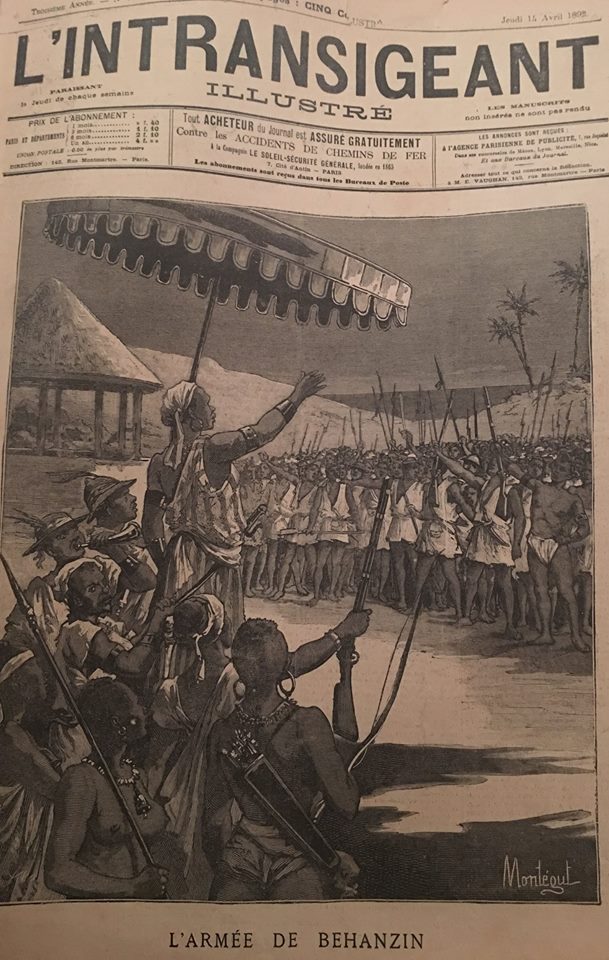
A fight, 14 months of resistance, a burnt palace and looted treasures
Behanzin received letters from Commander Dodds stating that his ancestors had signed treaties granting France certain territories annexed by Danxomé. He did not conceive it and did not accept it. France forbade the King to travel on the roads and lagoons of Ouémé river. This was the strategy by which it intended to undermine the military power of Behanzin, who used to use the Ouémé River to go to war.
The Kingdom was thus monitored. The French flag was planted in Agbome[2] after 14 months of resistance. It was the fall of the kingdom of Danxome and its illustrious king, Behanzin, who was deported to Martinique.
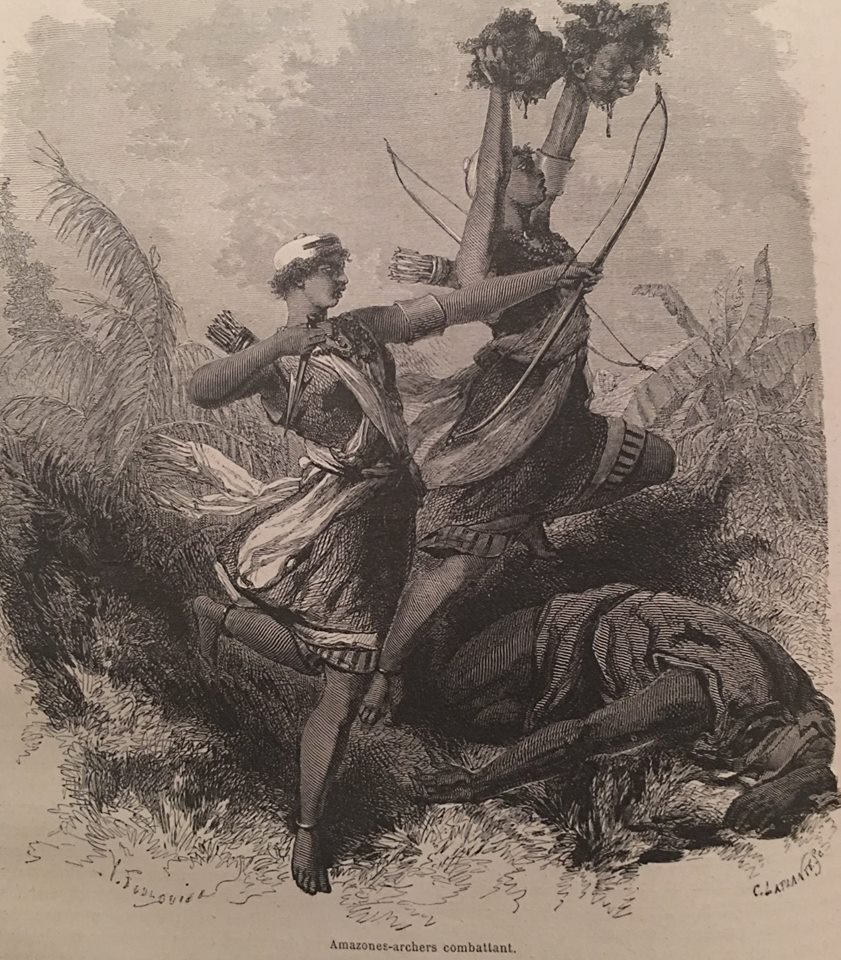
The exile…
Porto-Novo, December 3, 1892
On behalf of the French Republic, We, Brigadier General, Senior Commander of the French Establishments, Commander of the Legion of Honour. By virtue of the powers granted to us,
Declare:
King Behanzin Ahy – Djéré was deposed from the throne of Dahomey and forever banished from this country. The kingdom of Dahomey is and remains under the exclusive protectorate of France…[…][…
DODDS
If during his resistance we were able to appreciate King Behanzin’s love for the land of his ancestors, it was during his exile that it was most felt. Having a hard time being far from Africa, the king put aside his pride and multiplied the letters to “his friends” in France, begging them to grant him the favor of returning to live in Danxomé. He constantly recalled the great friendship he had built with the French before the war. He pointed out that the war occurred because of the manipulations of evil people like Jean Bayol and Toffa 1st.
Behanzin was ready to make concessions and be in favour of French politics. Unfortunately, none of his letters were followed by a reply. As his health was deteriorating, he was sent to Algeria and died there on December 10, 1906. His remains were transferred in May 1928 to Djimè (Agbome).
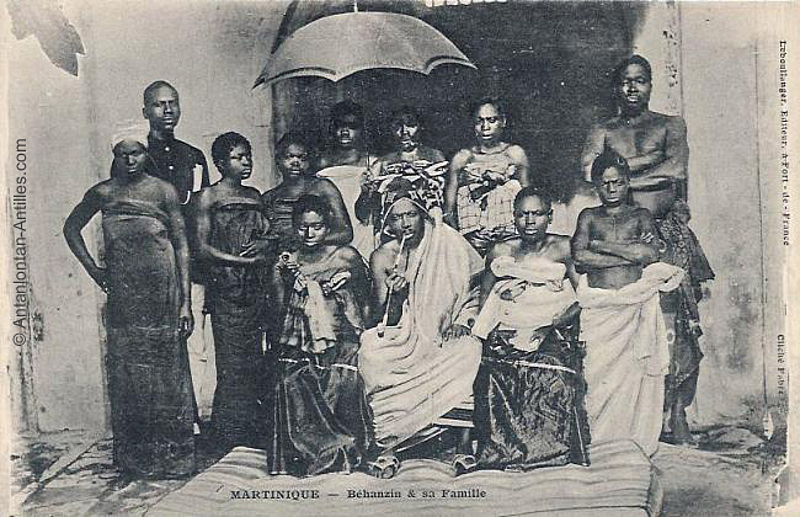
We encourage you to read King Behanzin’s correspondences yourself to discover the details of his reign.
If you learned more about our history, share this article to edify your friends!
[1] Akaba founder of the Kingdom of Danxomé is an ancestor of King Behanzin
[2] Known today as… Abomey