
When we name famous African authors, they are mostly men : Leopold Sedar Senghor, Chinua Achebe, Amadou Kourouma, Amadou Hampaté Ba, etc. But what about women?
As Hugo Bréant points out in his book De la littérature féminine africaine aux écrivaines d’Afrique, speaking of female African writers is usually about highlighting an exceptionality.
Although less known than their colleagues, female African authors are to mention. Despites their different style and themes , these great authors of African literature have a common point : they shatter taboos. They write, and draw the entire story with a single stroke.
Here are the portraits of seven amazing women who left their mark on the african literature.
1 – Mariama Bâ


Une si longue lettre. The title itself is enough to describe the extent of the impact of this book on African literature. Even those who never read it, once heard about it and therefore for a good reason : it was omnipresent. A cult and striking novel that is for me one of the best book of African literature of all times.
This literary work is credited to Mariama Bâ. Born in Dakar in 1929, she was confronted in her early ages to life realities. She loses her mother while she’s still a child and is sent to live to her grandmother’s house.
Very gifted at school and particularly in letters, young Mariama keeps on scoring good grades, obtaining her primary school certificate at 14 (school enrollment were not done at an early age at this time) before entering Rufisque’s Normal School, where she will graduate in 1943 with a teacher’s degree.
It’s only in 1979, with Une si longue lettre, that Mariama Bâ decided to start writing. A true ode to the African woman, this book is a series of letters written by Ramatoulaye to her friend Aïssatou after the death of her husband. Devastated and forsaken, Ramatoulaye shares her bitterness and her moods while depicting a pessimistic portrait of the Senegalese society and the place given to women.
First novel, first success. Her book is a hit, first in Senegal then spreads to other countries and translated in many languages. Prizes did not wait long to come, in 1980 Une si longue lettre won the Noma Prize at the Frankfurt Book Fair.
But Mariama Bâ is not one to rest on her laurels. She writes another book, Le chant écarlate, published in November 1981 but unfortunately she will not have the opportunity assist to its publication. She died from a cancer on August 17th of 1981, in Dakar, at the age of 52.
Her career may have been short, it only lasted two years, but her writing keeps on having an impact nowadays. Spearhead of the feminin cause, enrolled in many associations advocating for education and women’s rights, Mariama Bâ is undoubtedly one of the pioneers of Francophone African literature, inspiring hundreds of women writers to express their ideas.
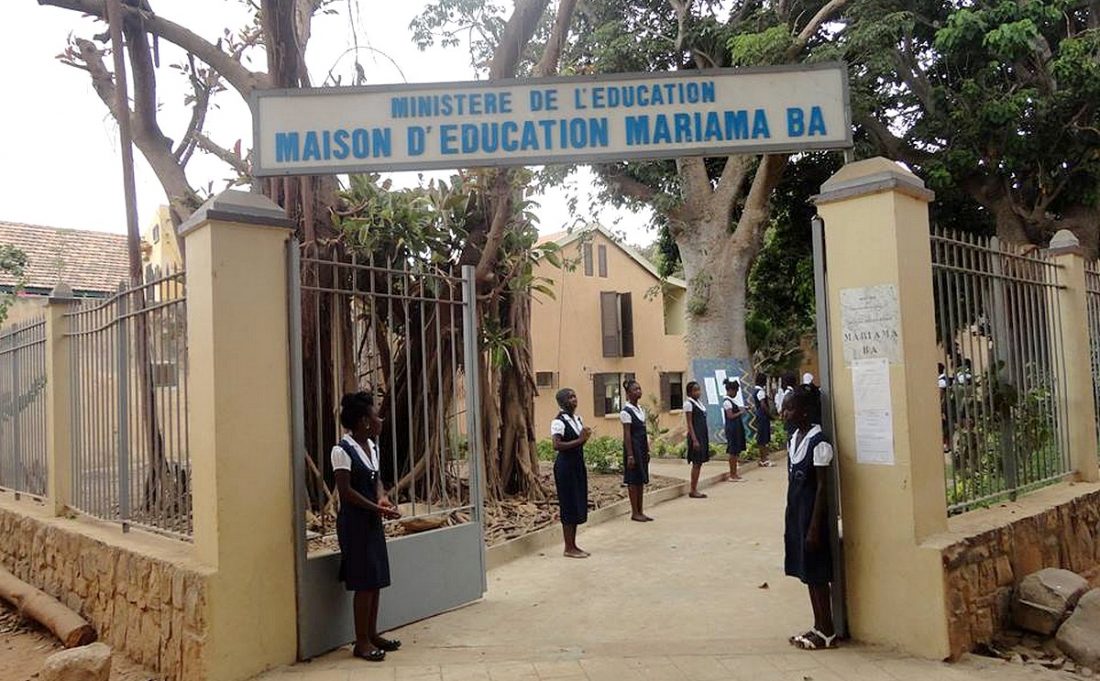
A girl’s school located on the Gorée Island was named in her memory.
It’s all the families, rich or poor, united or torn, conscious or unthinking who constitute the Nation. The success of a nation passes irremediably by the family.
Mariama Bâ
2 – Aminata Sow Fall
Born in 1941, Aminata Sow Fall first attended Faidherbe and then Van Vo high schools, (now renamed Lamine Gueye) before moving to France where she obtained a Bachelor’s degree in Modern Letters. She gets married in 1963 and goes back to Senegal where she worked as a teacher.
Her first book, Le revenant, was published in 1976 by Nouvelles éditions Africaines. It’s the story of Bakar, a modest employee who, facing the pressure of his entourage, will misappropriate funds from his employer’s company.
This book was good but not the one that propelled her. If her name is known by lots of us, it’s because of the book she published 3 years later, La grève des bàttu, for which she won the Black Africa Great Literature Prize in 1980. bàttu is a word in Wolof language which designates the bowl used by beggars; by extension it refers to beggars themselves.
La grève des bàttu, is the story of a rebellion, the one of the talibés against a politician who wants to expel them from the city. 38 years after the its publication, this theme is still relevant in some specific points.
Aminata Sow Fall is now 76 but her passion for writing has not aged a bit. In 2017, the one that Alain Mabanckou considers as “ the biggest African novelist ” reveals her latest masterpiece to date, L’empire du mensonge.
From the founding of the Khoudia Publishing House, to the International study center for literature research and reactivation, Arts and culture in Saint-Louis, through the African Office for writers rights in Dakar, Aminata Sow’s life is a constant battle to put the light on this art which still has difficulties to totally emancipate itself.
Culture is the most noble food, it raises us above small material instincts.
Aminata Sow Fall
Let’s leave Senegal for a bit and move to Douala, in Cameroun.
3 – Calixthe Beyala
Born in Douala in 1961, Calixthe Beyala is from a Bamileke father and a Béti mother. Calixthe’s parents got divorced shortly after her birth, and like Marima Bâ, her education was then entrusted to her grandmother.
She will live quite a difficult childhood marked by poverty, her older sister being the only one to provide to the family. Calixthe still manages to fulfill her studies until the age of 17 when she immigrated to France and obtains her baccalaureate in Accounting. She will then pursue in Management and Letters studies. Her first book, C’est le soleil qui m’a brûlé, is published in 1987. It’s the beginning of a big career.
Calixthe Beyala then goes on to win prizes and distinctions : the Black Africa Great Prize in 1993, with Maman a un amant, the French Academy’s François-Mauriac Prize and the Tropic Prize for Assèze l’Africaine, the next year. In 1996, she wins the French Academy’s Great Prize for Les honneurs perdus and two years later UNICEF’s Great Prize for La petite fille du réverbère. In parallel to her successful writer’s career, Calixthe campaigned for women cause, Francophonie and visible minorities rights through the Equality Collective of which she is the spokesperson.
You will see : my words twitch and jingle like chains. Words that detonate, decay, deviate, tumble, torture! Words that spank, slap, break and grind! That the one who feels uncomfortable passes his way.
Calixthe Beyala
4 – Fatou Diome
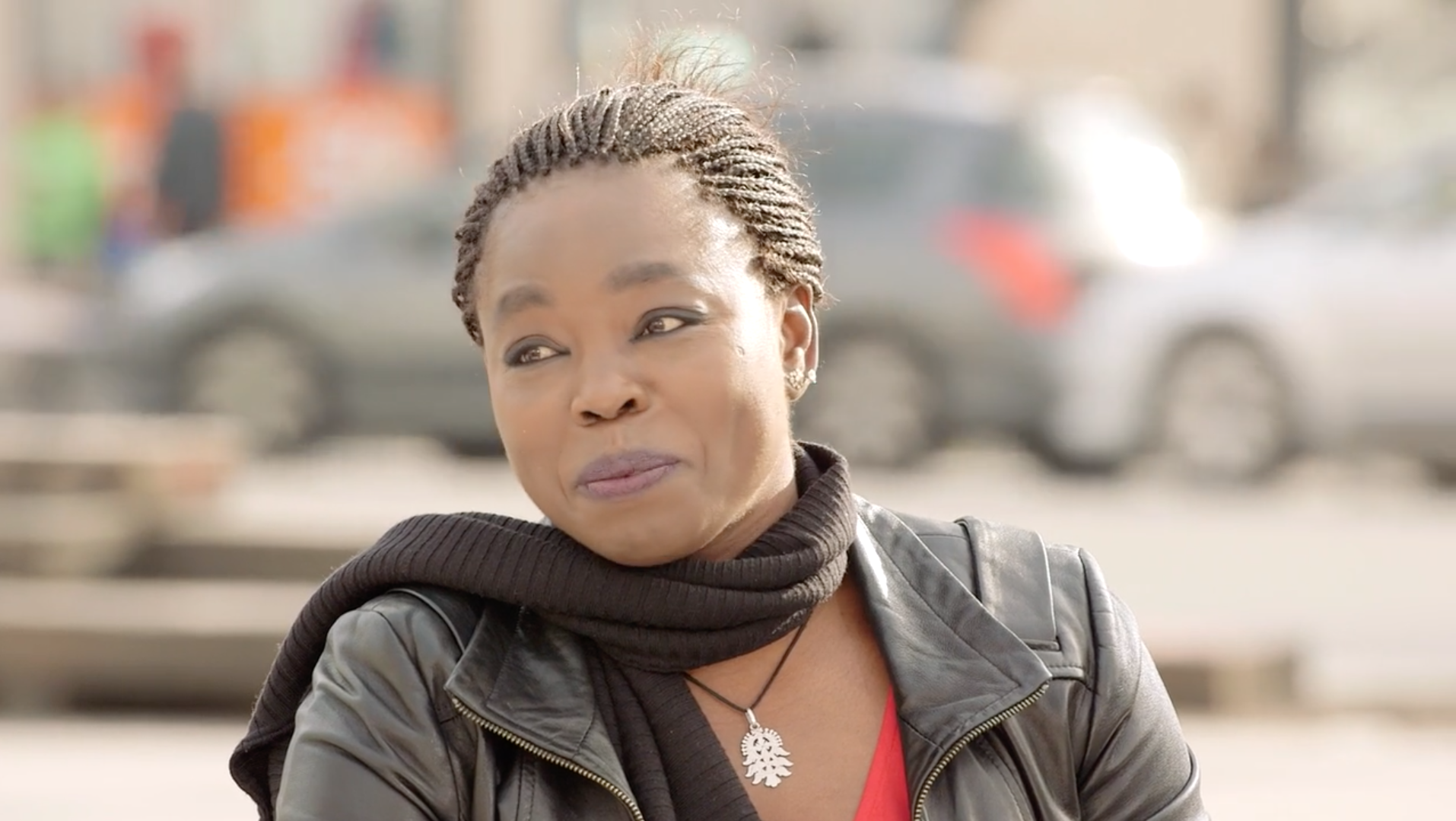
Born in 1968 on the island of Niodor in Senegal and as it seems to be the tradition of great African writers, Fatou Dione was raised by her grandmother.
Truly “nonconformist” , Fatou decides herself to go to school, which was something unusual for young girl at the time and is passionate about francophone literature.
This passion will naturally lead her to writing. In 2011, La préférence nationale is published. This volume of poetry marks her entry in the circle of authors.
It’s in 2003 that reputation became global with her first novel, Le ventre de l’Altlantique, which tackles the thorny emigration problem.
That same year, the book won the Chatal Lapicque’s Hemisphere Award and two years later the LiBeraturpereis, a prize awarded each year by a a women committee to a writer from Africa, Asia or Latin America. She will then publish several writings such as Ketala in 2006, Celles qui attendent in 2010 pr Marianne porte plainte in 2017.
Fatou Diome is also known for her commitment and outspokenness on TV shows as when appeared on the show Ce soir ou jamais, in the episode devoted to migrants or for her altercations with Marine Le Pen, President of the National Front, an extreme right-wing politic .
« We see the poor who move, we do not see the rich who plunder our countries »
Fatou Diome
5 – Chimamanda Ngozi Adichie
Chimamanda Ngozi Achidie is undoubtedly one of the African literary phenomena in recent years.
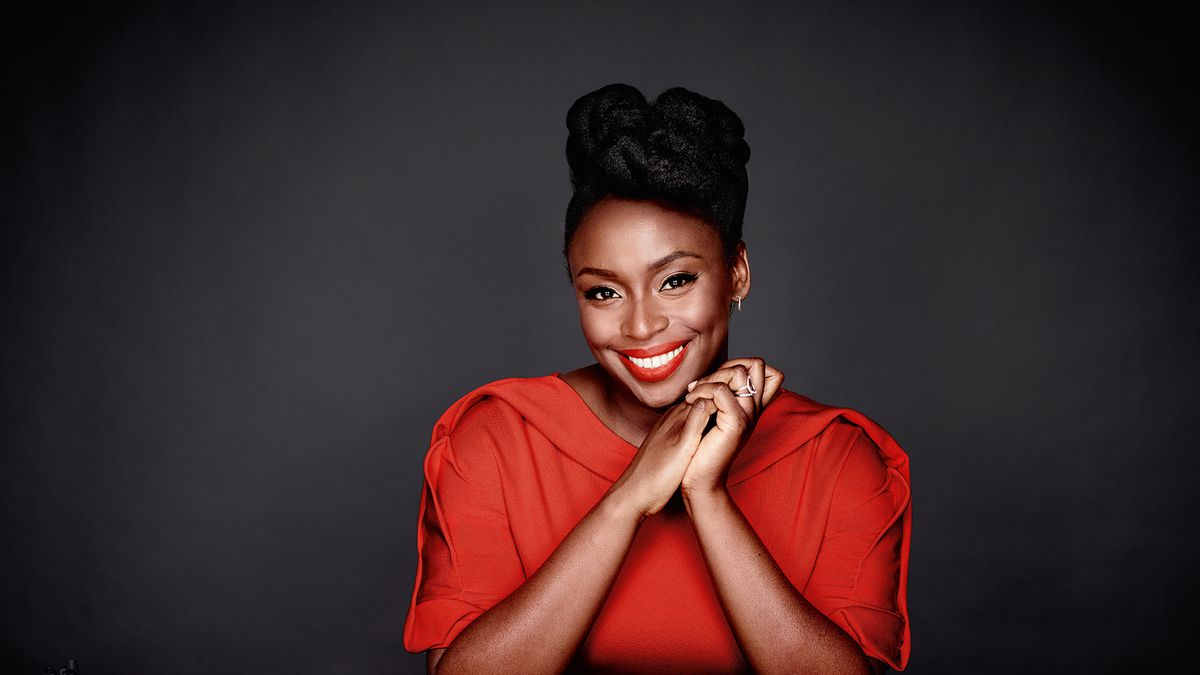
Born in 1977 in Enugu, Nigeria, Chimamanda leaves her country at the age of 19 to join Uncle Ben’s. She starts studying at Drexel University in Philadelphia and continued at the Eastern Connecticut State University where she studied Communications and Political Sciences. She holds a Master’s Degree in Literary Creations and one in African Studies.
Her first book, L’Hibiscus pourpre, published in 2003, was acclaimed by critics and won the Commonwealth Writers’ Prize in 2005.
Three years later, L’autre moitié du soleil, a novel with a heart-rending story about the Biafra War, is released. The novel would won the Orange Prize for Fiction a year later
The rights of her novel Americanah, published in 2013, winner of the National Book Critics Circle Fiction, where bought by Lupita Nyong’o to be adapted to the screen with herself playing the lead role .
Today, Chimamanda Ngozi Adachie’s notoriety goes beyond writing. Proud feminist, she is the author of the famous quote “ We should all be feminists”, pronounced in 2012 during a TED conference. Her words will be used by millions of people around the world, including celebrities such as Beyoncé and Rihanna.
“ I want to be who I am, without having to conform to models, to what society wants me to be “
Chimamanda Ngozi Adichie
6- Ken Bugul
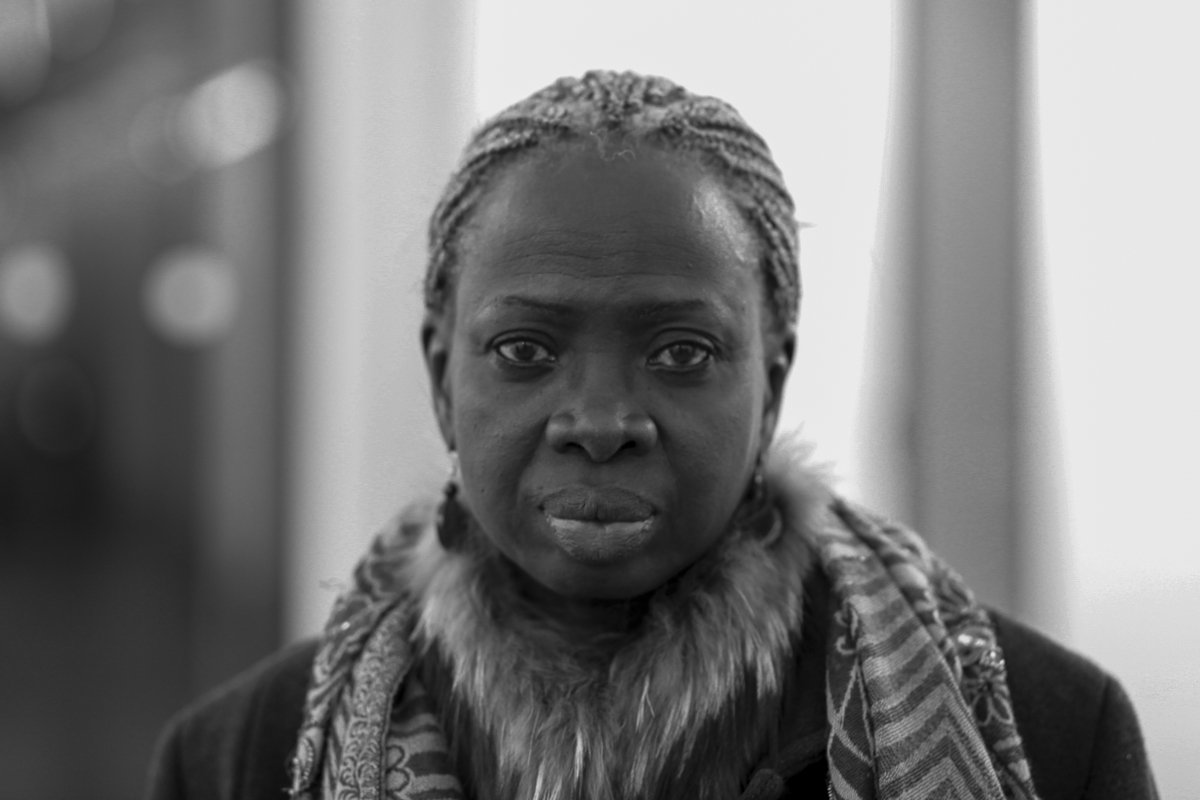
Personne n’en veut (Nobody wants it), is the nickname Marietou Mbaye chose to sign her books. Born in 1947 in Ndoucoumane, Ken Bugul is a Senegalese novelist whose career begins with a trilogy that look like an autobiography. She wrote : Le baobab fou, in 1984, then Cendres et braises and Riwan ou le chemin de sable in 1994 and 1999.
The last one, concluding the trilogy, will earn worldwide recognition by winning the prestigious Black Africa Great Literary Prize in 1999.
Ken Bugul’s biography is just like her career, perfectly illustrated by her nickname : a chaotic journey strewn with pain and disappointment.
Her life has not been easy : a blind father who was 85 when she came to birth, a mother who abandons her when she is 5, a nightmarish first marriage in France and abit more than a year being homeless… just to name some of the dire trait situations she struggled with.
And that’s why this author so exceptional : she always knew how to get back on her feet.
“ Life is a lot of madness and a lot of humility. Madness is not negative. It help you to break free. Humility is essential. Being humble, is being attentive to the world, to what surrounds you. And keeping all your senses awake ”
Ken Bugul
7- Leonora Miano
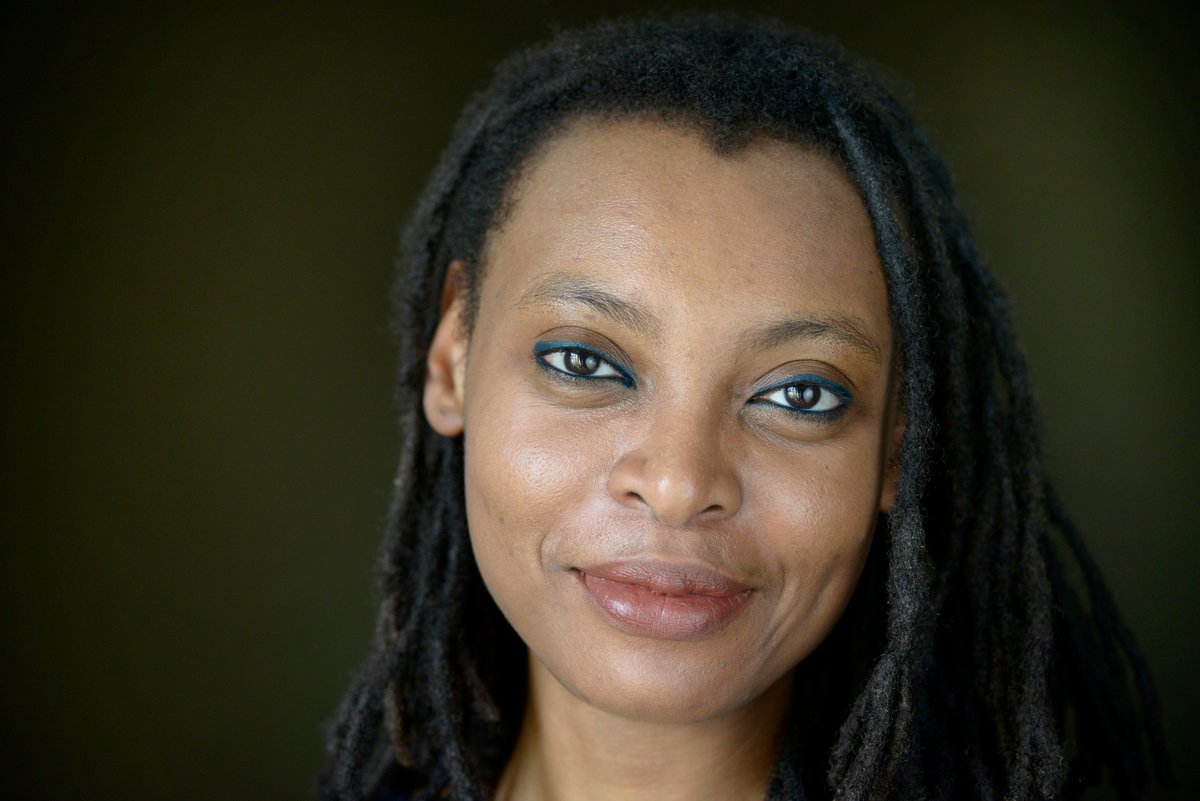
Born on March 12th, 1973 in Douala, Leonora Miano is a Cameroonian writer with en atypical career.
Her first book, L’intérieur de la nuit, was a total hit. Very well received by the critics, it collected six prizes on its own including the First woman Novel Prize in 2006 and the Cameroonian Excellence Award in 2007.
Proof that is was not only a stroke of chance her second novel, Contours du jour qui vient, wins the famous Prix Goncourt des Lycéens.
French researcher and multi disciplinary teacher, Daniel S. Larangé, will describe Leonora Miano’s literary style as “afropean” due to her ability to mix both cultures.
Highly engaged, Miano wins the Femina Prize in 2013, which is awarded by a prestigious all-female jury, for her novel, La saison de l’ombre that deals, through a poignant story, with the beginnings of black slave trade.
The main concern in Africa is that of damaged self-consciousness following black slave trade.
Leonora Miano